Quick summary:
- Fire extinguishers are classified by letter (A, B, C, D, K) based on the type of fuel they are designed to put out.
- Most homes and offices rely on multipurpose ABC extinguishers, while kitchens and vehicles often need class-specific units.
- Matching the extinguisher to the hazard, and keeping it inspected, is what actually determines whether it works in an emergency.
Choosing the right fire extinguisher depends on what could realistically catch fire in a given space. A unit rated for grease fires will not perform the same way on an electrical panel, and a canister built for wood and paper will not stop a metal fire from spreading.
Picking the correct Fire extinguishers for a home, office, or vehicle starts with understanding the five recognized classes and matching them to the hazards most likely to occur in that environment. A kitchen needs different protection than a garage, and a server room needs something different again.
Understanding the Five Extinguisher Classes
Each extinguisher class is built around a specific fuel source, and using the wrong one can make a fire worse rather than better.
- Class A handles ordinary combustibles such as wood, paper, cloth, and many plastics.
- Class B is rated for flammable liquids and gases, including gasoline, oil, and solvents.
- Class C is designed for energized electrical equipment like wiring, motors, and circuit panels.
- Class D covers combustible metals such as magnesium, titanium, and sodium.
- Class K is built for commercial cooking oils and fats found in restaurant kitchens.
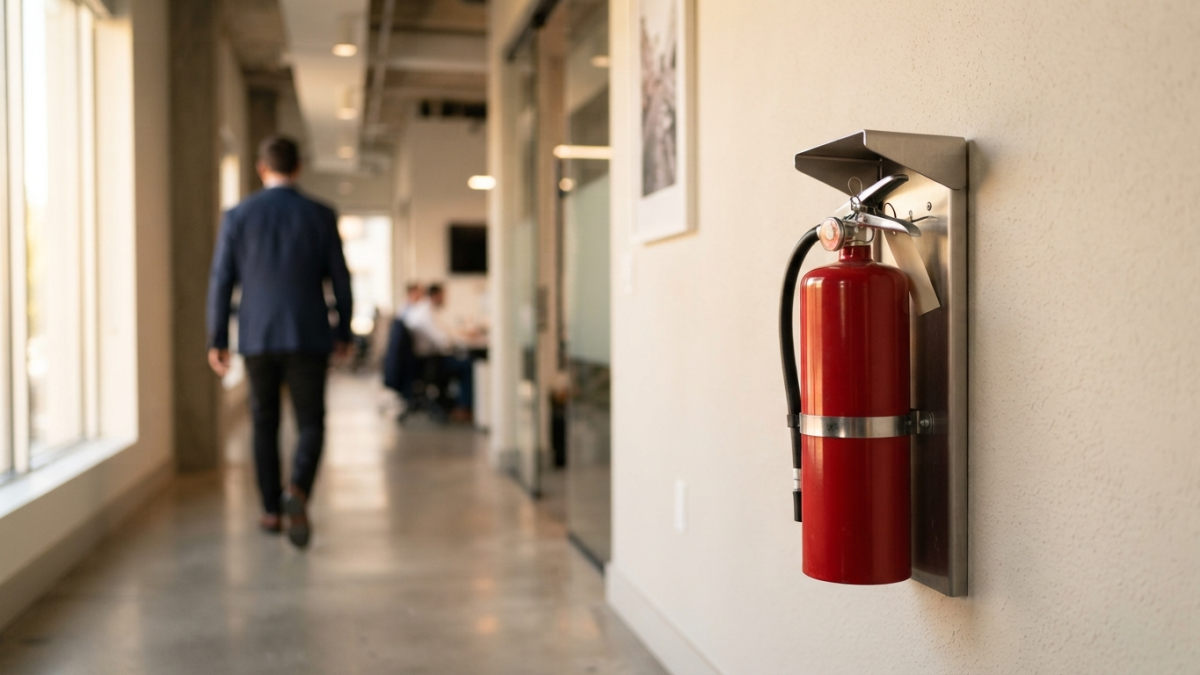
According to the OSHA fire extinguisher guidelines, the administration recognizes these five fire extinguisher types and classes, with equipment required to be readily visible and accessible, placed along normal paths of travel and near exits, with signs indicating the location of each installation.
Which Type Fits Which Setting
Homes
Most residential fires start with cooking, electrical issues, or ordinary household materials, which is why a multipurpose ABC extinguisher is the common choice for kitchens, garages, and utility rooms.
Offices and Commercial Spaces
Offices typically combine paper-based combustibles with electrical equipment, so ABC or Class C-rated units near workstations and server rooms are standard. Class C fires occur in energized electrical equipment, such as motors, transformers, and control panels, and only non-conductive extinguishers, like those with carbon dioxide or dry chemicals, should be used to avoid electrical shock.
Vehicles
A compact dry chemical or ABC-rated extinguisher is generally recommended for personal and commercial vehicles, since engine compartment fires can involve fuel, wiring, or upholstery depending on where the fire starts.
Commercial Kitchens
Restaurants and food service kitchens with deep fryers require Class K protection. Class K extinguishers are built for commercial kitchen cooking fires involving cooking oils and fats at high temperatures, using a wet chemical agent that creates a foam blanket, and most commercial kitchens with deep fryers are required to have K-class units as part of their fire suppression system.
Comparing Extinguisher Classes at a Glance
| Class | Typical Hazard | Common Setting |
|---|---|---|
| A | Wood, paper, cloth, plastics | Homes, offices |
| B | Gasoline, oil, solvents | Garages, workshops |
| C | Electrical equipment | Offices, server rooms |
| K | Cooking oils and fats | Restaurant kitchens |
Placement, Inspection, and Upkeep
Having the right class of extinguisher only matters if it is placed correctly and kept in working condition.
- Mount units where they are visible and easy to reach along normal travel paths.
- Check the pressure gauge and physical condition on a routine basis.
- Schedule professional inspection and recharging on the manufacturer’s recommended interval.
- Replace or service any unit that shows corrosion, a damaged hose, or a gauge outside the normal range.
Travel distance also matters for larger spaces. For Class A hazards, the maximum travel distance from any point in the protected area to the nearest extinguisher is 75 feet, while for Class B hazards, the limit drops to 50 feet.
Frequently Asked Questions
Can one extinguisher cover multiple fire classes? Yes. Many multipurpose units are rated ABC, meaning they are built to handle ordinary combustibles, flammable liquids, and electrical fires with a single device.
How often should a home or office extinguisher be checked? A visual check of the gauge and housing should happen regularly, with professional inspection and recharging scheduled on a routine basis to confirm the unit will function when needed.
Is a car fire extinguisher different from a home unit? Vehicle extinguishers are typically smaller and rated for the same combination of fuel, electrical, and ordinary combustible risks found in a car, often in a compact ABC-rated canister.
What happens if the wrong class of extinguisher is used? Using the wrong type can spread the fire, create a shock hazard on electrical equipment, or cause a violent reaction on metal fires, which is why matching the class to the hazard is critical.
Matching the correct extinguisher class to a home, office, or vehicle is a practical safety step that depends on understanding the hazards present in each space. Fire Extinguisher Service Center has served the greater Portland and Beaverton, Oregon area with fire extinguisher sales, inspections, recharging, and related fire protection equipment support for homes and businesses. For help selecting, inspecting, or servicing the right unit for a specific property or vehicle, Click Here to connect with Fire Extinguisher Service Center and get guidance suited to the hazards on site.