Key point:
- Durable patio pavers for North Port, FL properties should balance material strength, water drainage, and heat resistance to withstand sun, humidity, and seasonal rain.
- Concrete, travertine, and permeable paver options each offer different maintenance needs and lifespans.
- Local suppliers can provide guidance on paver thickness, finish, and base materials suited to Florida soil conditions.
Selecting durable, well-draining materials rated for Florida’s heat and heavy rainfall is the most direct way to extend the life of an outdoor patio. Material choice, proper base preparation, and finish type each affect how a patio performs over years of sun exposure and tropical downpours.
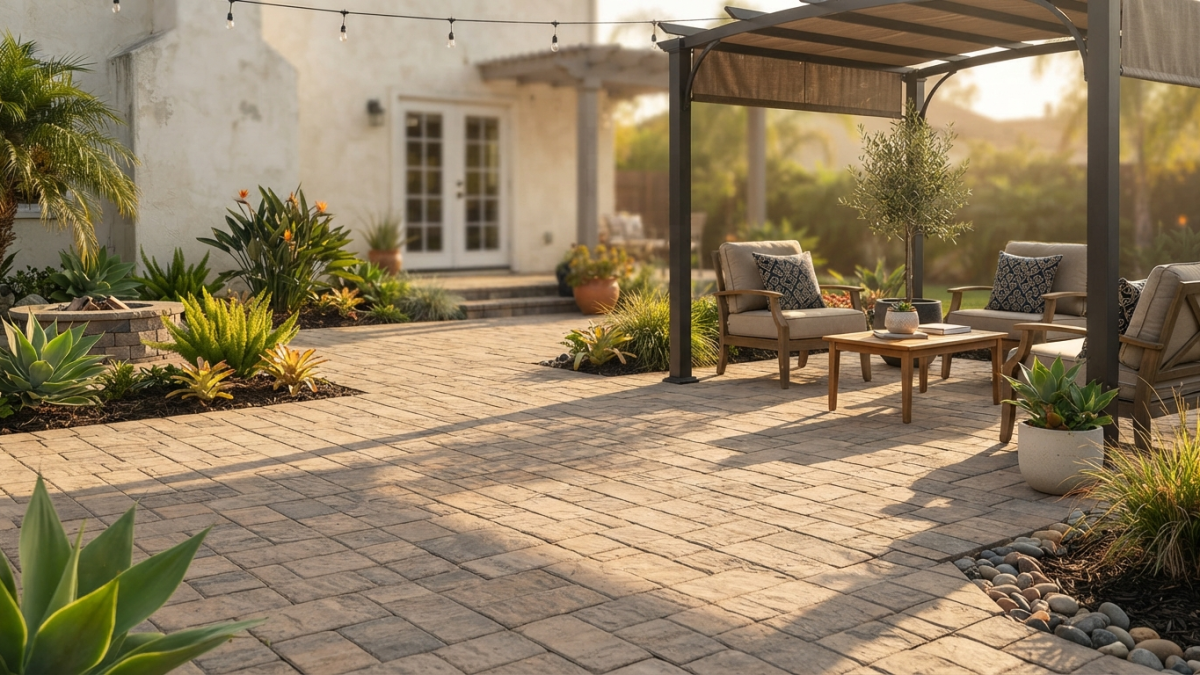
Homeowners researching Patio Pavers for a new or replacement patio typically weigh three factors: upfront cost, long-term maintenance, and how well the material handles standing water. Concrete pavers remain a common choice because they are manufactured in a wide range of thicknesses and finishes, while natural stone options like travertine offer a cooler surface underfoot during warm months. Each material interacts differently with sandy Gulf Coast soil, so the base layer matters as much as the paver itself.
Material Options for Florida Patios
Pavers sold for outdoor use generally fall into a few categories, each with distinct performance traits in humid, high-UV climates.
- Concrete pavers: widely available in multiple colors and patterns, with strong compressive ratings for foot and light vehicle traffic.
- Travertine pavers: naturally porous stone that stays cooler in direct sun, a relevant feature for uncovered patios.
- Permeable interlocking pavers: designed with gaps or porous joints that let water pass through the surface into a stone base layer rather than pooling on top.
Why Drainage Matters in North Port, FL
Standing water on a patio surface accelerates erosion of joint sand and can undermine the base layer over repeated wet seasons. Permeable paver systems address this by allowing rainfall to infiltrate through the surface, a design approach the EPA identifies as part of sustainable stormwater management at its own facilities, where permeable surfaces allow stormwater to infiltrate through porous surfaces into the soil and groundwater. For properties in North Port, FL with heavier seasonal rainfall, this drainage behavior can reduce pooling near building foundations and walkways.
Comparing Paver Types
| Paver Type | Heat Resistance | Drainage | Relative Maintenance |
|---|---|---|---|
| Standard concrete | Moderate | Low to moderate | Low |
| Travertine | High | Moderate | Moderate |
| Permeable interlocking | Moderate | High | Moderate |
This comparison reflects general material behavior rather than a specific product line, since performance varies by manufacturer, thickness, and installation quality.
Installation and Base Considerations
A patio’s long-term stability depends heavily on what lies beneath the surface pavers, not just the pavers themselves.
- Base depth: a compacted aggregate base is typically required to prevent shifting in sandy soil common across the region.
- Edge restraints: plastic or metal edging keeps paver fields from spreading over time.
- Joint material: polymeric sand or permeable aggregate fills gaps depending on whether drainage is a priority.
- Sealers: protective coatings can reduce staining and limit weed growth between joints.
Pavers sold through regional building material suppliers are often available in 30mm or 60mm thicknesses, with thicker units generally recommended for driveways and heavier-use patios compared to thinner units used for decorative walkways.
Based in Venice, FL, a cement and masonry supply business there serves surrounding communities, including North Port, FL, with paver and landscaping materials used in residential patio projects. Homeowners in that service area typically source pavers, paver accessories, and sealers locally rather than ordering from out-of-region suppliers, which can simplify matching replacement units to existing patio sections.
Frequently Asked Questions
How thick should patio pavers be for residential use? Residential patios commonly use thinner paver units than driveways, though exact thickness depends on the product line and expected foot traffic.
Do permeable pavers require different maintenance than standard pavers? Permeable systems may need periodic joint cleaning to keep infiltration gaps from clogging with sediment, in addition to standard sweeping and occasional sealing.
Can cracked or damaged pavers be replaced individually? Interlocking paver systems generally allow individual unit replacement without disturbing the surrounding patio, provided matching material is available.
What causes pavers to shift over time in Florida soil? Inadequate base compaction, erosion from heavy rainfall, and missing edge restraints are common causes of paver movement in sandy regional soils.
Business Info
White Cement Specialties is a landscaping and paver supply business operating out of Venice, FL that stocks paver products, sealers, and related hardscape materials for regional building and remodeling projects.
Current product and service area information for White Cement Specialties is available for reference by homeowners planning patio work.