Quick summary:
• Asphalt paving contractors handle surface preparation, material supply, laying, compaction, and finishing for driveways, carparks, and roads.
• Verifying prequalification status, accreditation, and project process helps property owners and councils compare contractors with confidence.
• Central Coast, NSW property owners can check contractor credentials through Transport for NSW records before committing to a project.
Choosing asphalt paving contractors involves confirming technical accreditation, understanding the paving process, and matching contractor capability to project scale, whether that is a residential driveway or a council road resurfacing job. This guide outlines the practical steps involved in evaluating and working with a paving contractor on the Central Coast, NSW.
Selecting Asphalt Paving Contractors starts with checking whether a company holds relevant prequalification, since government and larger commercial projects typically require it. In New South Wales, Transport for NSW administers a prequalification scheme that classifies contractors by technical and financial capacity across categories including asphalt paving. This system exists to protect both the client and the contractor from projects that exceed demonstrated capability.
How Contractor Prequalification Works
Transport for NSW operates the National Prequalification System, which grades contractors for machine-placed asphalt paving under categories A1 and A2, each tied to specific equipment, staffing, and experience thresholds. According to Transport for NSW, the Prequalification Scheme classifies contractors commensurate with their technical and managerial expertise, financial capacity and previous performance, aiming to facilitate tender assessment and protect both parties against over-commitment.
A contractor holding A2 prequalification generally has demonstrated:
• Machine-placed asphalt paving experience on larger-scale projects
• Equipment capable of placing asphalt to greater depths and widths
• Supervisory and engineering staff with relevant years of experience
• Certified safety, environmental, and quality management systems
This tiered structure means a contractor’s prequalification level is a reasonable indicator of the project size and complexity they are equipped to handle. For further detail on category requirements, the Transport for NSW prequalification scheme outlines category definitions and application documents.
What the Asphalt Paving Process Typically Involves
Most paving projects follow a similar sequence regardless of scale, though the equipment and crew size vary between a residential driveway and a council road.
1. Site assessment and preparation – existing surface condition is reviewed, and the base is cleared, graded, or stabilised as needed.
2. Material selection – asphalt mix is chosen based on traffic load, climate exposure, and whether recycled content is specified.
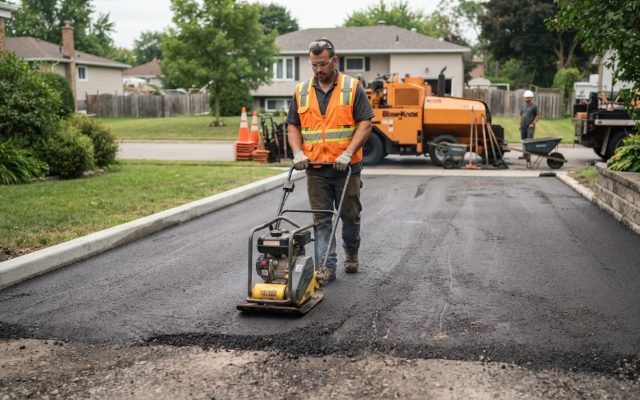
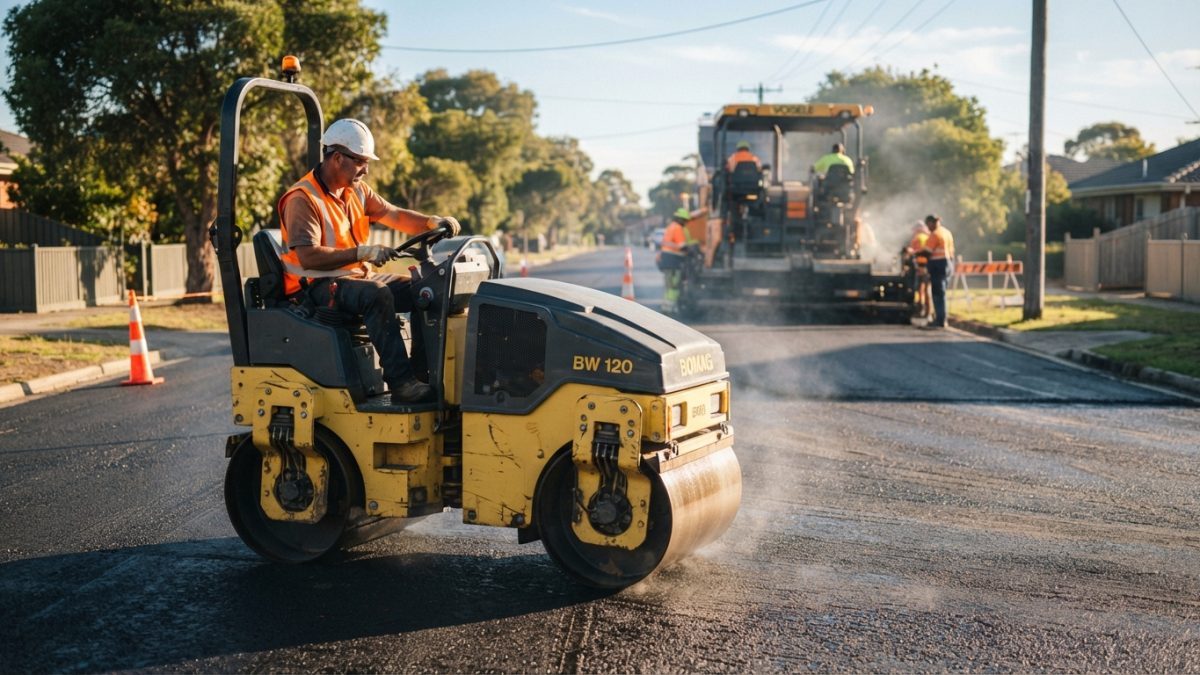
3. Laying and compaction – asphalt is placed using a paver or hand tools for smaller areas, then compacted with rollers to achieve density and surface strength.
4. Finishing and quality checks – surface levels, drainage falls, and compaction are checked against project specifications before handover.
Larger government or council contracts may also require pavement testing, materials testing, and documented quality assurance records throughout the process.
Comparing Contractor Capability Levels
| Project Type | Typical Scale | Relevant Credential |
| Residential driveway | Small, single property | General trade experience, basic insurance |
| Commercial carpark | Medium, repeat traffic loads | Quality and safety accreditation (ISO 9001, AS/NZS 4801) |
| Council or state road | Large, public infrastructure | A1/A2 prequalification with Transport for NSW |
Matching the contractor’s credential level to the project reduces the risk of delays caused by inadequate equipment or insufficient documentation for approval processes.
Regional Considerations for Central Coast, NSW
Coastal climate conditions, including higher rainfall and humidity, can affect asphalt curing times and the scheduling of paving work in Central Coast, NSW. Property owners and councils commissioning paving work in this area typically factor in weather windows and drainage design to reduce long-term surface damage. Contractors servicing this region are often based further north along the Hunter coastline; based in Tomago, NSW, one such operation extends its paving and bitumen services to projects across Central Coast, NSW rather than maintaining a branch office there.
Frequently Asked Questions
What is the difference between asphalt paving and spray sealing? Asphalt paving involves laying a mixed asphalt product over a prepared base, while spray sealing applies a bituminous binder layer followed by aggregate, generally used as a faster, lower-cost option for lighter-trafficked surfaces.
Do residential driveways need a prequalified contractor? Prequalification is primarily required for government and larger infrastructure tenders; residential projects do not typically require it, though checking for relevant insurance and trade experience remains advisable.
How long does newly laid asphalt take to cure? Cure times vary with mix type, thickness, and weather conditions, and contractors generally advise on specific timeframes before opening a surface to vehicle traffic.
What accreditation should a commercial paving contractor hold? Relevant accreditation can include ISO 9001 (quality), ISO 14001 (environmental management), and AS/NZS 4801 (safety), alongside any applicable Transport for NSW prequalification category.
Final Notes on Working With a Paving Contractor
Verifying credentials, understanding the standard paving process, and matching contractor capability to project scale are the practical steps that reduce risk when commissioning asphalt work, whether for a driveway or a larger civil project in Central Coast, NSW. Current service area details for Newpave Asphalt Tomago are published for reference by property owners and project managers in the region.