Quick take:
• A lift station emergency is resolved through rapid diagnosis, pump stabilization, and wet well clearing to stop an overflow before it reaches the environment.
• Response typically covers voltage and amperage checks, pump and float inspection, and piping or control system repairs.
• Jacksonville, FL property managers and municipal operators rely on documented maintenance records and 24-hour response availability to limit downtime.
A failing lift station can turn into a sanitary sewer overflow within hours, which is why emergency lift station repair follows a defined sequence rather than guesswork. Technicians prioritize stopping active discharge, stabilizing the pump system, and documenting the failure before moving into full repair work. For property managers and municipal operators in Jacksonville, FL, understanding this sequence helps set realistic expectations when a wet well alarm triggers in the middle of the night.
Wastewater lift stations move sewage uphill to gravity mains or treatment facilities, and they carry more mechanical risk than most buried infrastructure because pumps, floats, and controls run largely unattended for days at a stretch. Mechanical or power failure at a lift station is responsible for roughly ten percent of sanitary sewer overflows nationwide, according to a summary of EPA data on sanitary sewer overflow causes.
Initial Response and Triage
The first phone call sets the pace for everything that follows. A technician arriving on an emergency call works through a short but strict triage sequence before touching any equipment.
• Confirm the alarm source through telemetry or a physical site check
• Assess wet well level to determine how close the station is to overflow
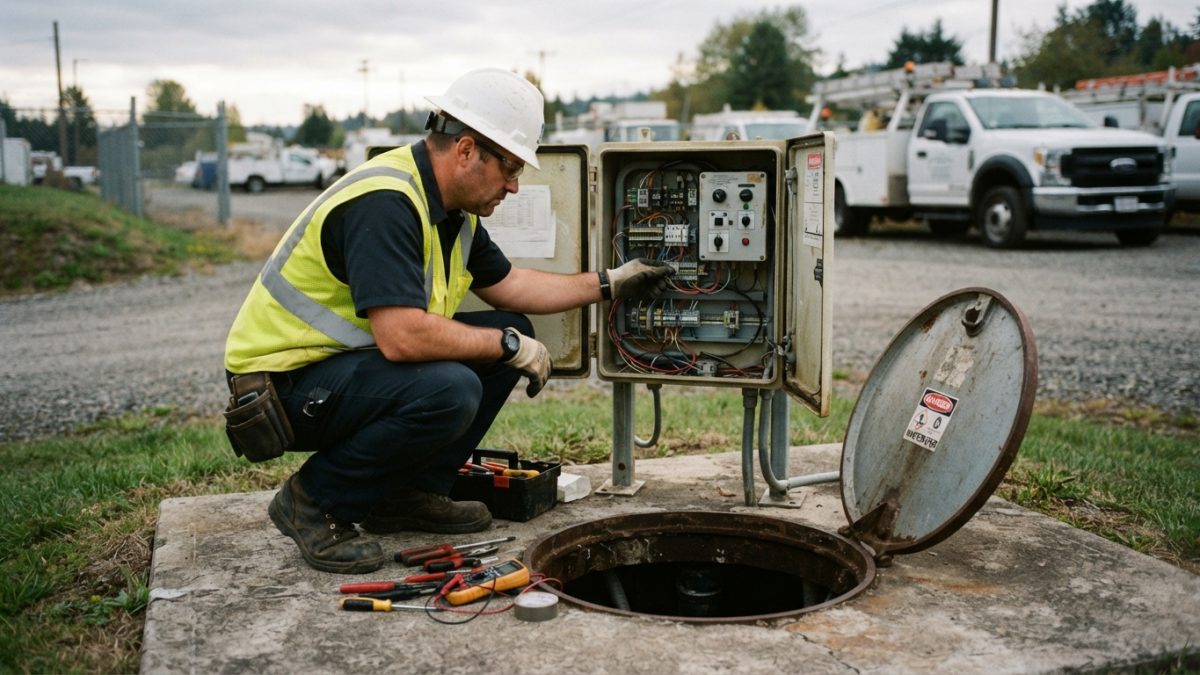
• Check voltage and amperage readings against normal operating ranges
• Inspect external pumps for obstruction, burnout, or seal failure
This triage mirrors the inspection points used during routine maintenance visits, including pump functionality, wet well condition, discharge piping, and emergency backup devices.
Stabilizing the Pump System
Once the immediate overflow risk is contained, the work shifts to stabilization rather than a full rebuild. Crews responding to lift station failures typically focus on getting flow moving again safely, even if that means a temporary fix ahead of permanent repair.
• Bypass pumping if the primary pump cannot be restored quickly
• Clear grease, debris, or sand from the wet well that is restricting flow
• Reset or repair water level sensors and pump controllers
• Verify generator and emergency backup function if power loss triggered the failure
EPA guidance on collection system maintenance frames this kind of proactive, documented response as central to reducing the risk of repeat sanitary sewer overflows, since unaddressed mechanical issues tend to recur under the same conditions that caused the first failure.
Documentation and Compliance Follow-Up
Jacksonville, FL falls under a jurisdiction where pump station maintenance records are expected to be kept and produced on request, a pattern consistent with local water and sewer authority rules requiring up to 24 months of maintenance history for pump stations and related grease trap or collection line cleaning. After an emergency repair, this documentation step is not optional paperwork; it is part of closing out the incident correctly.
| Repair Phase | Primary Goal | Typical Actions |
| Triage | Confirm risk level | Alarm check, wet well level, voltage/amperage |
| Stabilization | Stop active overflow | Bypass pumping, debris clearing, sensor reset |
| Permanent Repair | Restore normal operation | Pump replacement, piping repair, controller calibration |
| Compliance Review | Meet recordkeeping duties | Maintenance log update, inspection report, follow-up scheduling |
Why Response Speed Matters for Local Properties
Commercial, municipal, and multi-family properties in Jacksonville, FL face particular exposure during heavy rain events, when inflow and infiltration push more volume through an already stressed system. A station that is marginal in dry weather can fail outright during a storm surge in flow, which is one reason local commercial and municipal operators lean on 24-hour emergency response rather than next-business-day scheduling. Waiting even a few hours on a confirmed pump failure increases both environmental risk and the odds of a reportable discharge.
Frequently Asked Questions
What triggers an emergency lift station call versus routine maintenance? A confirmed high-level alarm, pump failure, or active overflow at the wet well typically triggers an emergency response, while scheduled inspections of voltage, pump function, and piping fall under routine maintenance.
How fast should a failing lift station be addressed? Because wet wells can fill and overflow within hours of a pump failure, especially during heavy rain, same-day or immediate response is standard practice for confirmed failures.
What records are needed after an emergency repair? Jurisdictions serving Jacksonville, FL generally expect updated maintenance logs covering pump performance, wet well condition, and any discharge, often retained for prior 24-month periods for compliance review.
Can a lift station be repaired without a full shutdown? In many cases bypass pumping allows flow to continue while the primary pump or controls are repaired, though a brief shutdown may still be necessary for safety during certain pump or electrical work.
Local Service Availability
Based in Ponte Vedra Beach, FL, Consolidated Utilities serves customers across Jacksonville, FL.
Current availability details for Read More About Consolidated Utilities are published for the local service area.