
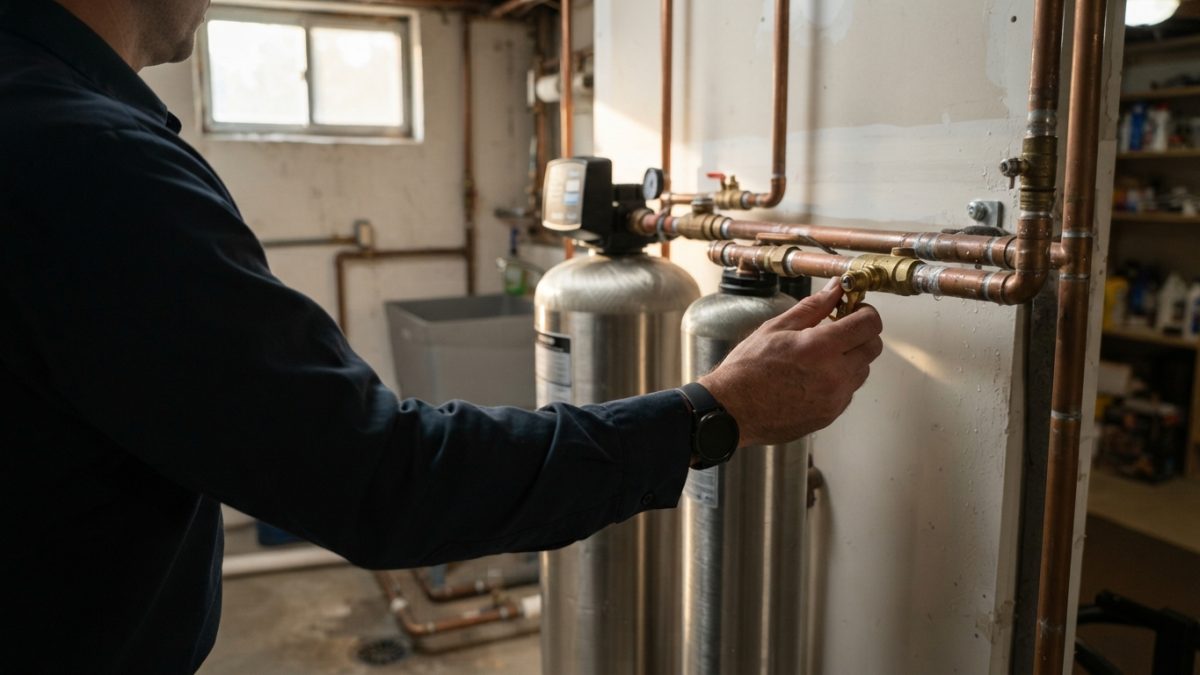
Essentially:
• The right water treatment system depends on what is actually in a household’s water, confirmed through testing rather than guesswork.
• Common options include water softeners, filtration systems, and reverse osmosis units, each addressing different contaminants or hardness issues.
• Matching system type to water test results and household usage prevents overspending on unnecessary equipment.
Choosing a water treatment system starts with understanding what contaminants or hardness minerals are present in a home’s water supply, since no single system solves every problem. A water test is the only reliable way to match equipment to actual need rather than marketing claims.
Homeowners researching water treatment systems often discover that hard water, sediment, and taste or odor issues are the most common triggers for an upgrade. Hardness minerals like calcium and magnesium can build up in pipes and appliances over time, while chlorine byproducts or sediment affect taste and clarity. Identifying the specific issue narrows the equipment choice considerably.
Start With a Water Test, Not a Guess
Before buying any equipment, a household should know its water hardness level, pH, and whether contaminants like iron, sulfur, or bacteria are present. Municipal water customers can request a consumer confidence report, while well owners need independent lab testing since no utility oversight applies to private wells.
According to the EPA’s guidance on private drinking water wells, well owners are responsible for testing their own water quality and are not covered by the same regulations as public water systems. This distinction matters because well water often carries different risks, including bacterial contamination or mineral content that public systems do not typically face.
Key testing points to confirm:
• Water hardness, measured in grains per gallon
• Presence of iron, sulfur, or manganese
• pH level and corrosivity
• Any bacterial contamination, especially for well water
Matching System Type to Water Problems
Different systems solve different problems, and combining the wrong equipment with the wrong issue wastes money without fixing anything. Three categories cover most residential needs:
| System Type | Best For | Limitations |
| Water Softener | Hard water, scale buildup, soap scum | Does not remove bacteria or most chemicals |
| Whole-Home Filtration | Sediment, chlorine taste/odor, general clarity | May not address hardness minerals |
| Reverse Osmosis | Drinking water purity, dissolved solids reduction | Typically point-of-use, not whole-house |
A softener addresses hardness specifically by exchanging calcium and magnesium ions for sodium or potassium. Filtration systems target sediment and chemical taste issues across the entire home’s plumbing. Reverse osmosis units, usually installed under a kitchen sink, focus on drinking and cooking water purity rather than whole-house volume.
Sizing and Installation Considerations
System capacity should match household size and daily water usage, since an undersized unit works harder and wears out faster. A family of four uses considerably more water daily than a couple, which affects softener grain capacity and filter replacement frequency.
Factors that influence sizing:
1. Number of people in the household
2. Peak daily water demand, including laundry and dishwashing cycles
3. Incoming water hardness level in grains per gallon
4. Available space for equipment installation
Professional installation also matters because improperly connected systems can create pressure imbalances or bypass issues that reduce treatment effectiveness. A system installed without accounting for existing plumbing configuration may underperform even if the equipment itself is well-suited to the water chemistry.
Maintenance Expectations After Installation
Every treatment system requires some ongoing attention, whether that means replacing filter cartridges, refilling softener salt, or scheduling periodic resin bed cleaning. Skipping maintenance is one of the most common reasons systems underperform within a few years of installation.
Routine upkeep typically includes:
• Checking and refilling salt levels in softener brine tanks
• Replacing sediment or carbon filters on a set schedule
• Monitoring water quality periodically to confirm the system still performs as expected
Frequently Asked Questions
How do I know if I need a water softener versus a filtration system? A water test showing high calcium and magnesium levels points toward a softener, while taste, odor, or sediment issues typically call for filtration instead.
Can one system handle both hardness and contaminants? Combination setups exist, pairing a softener with a filtration stage, but they are typically sized and selected based on specific test results rather than a one-size-fits-all package.
How long does a typical system last before replacement? Lifespan varies by component and usage, with resin tanks, filter media, and control valves each having different service intervals based on water quality and household demand.
Next Steps for Homeowners
Selecting equipment without a water test is the most common mistake homeowners make, and it often leads to either overspending or an ineffective setup. Starting with accurate water quality data keeps the decision grounded in the home’s actual needs rather than general assumptions.
For details on available equipment and scheduling an assessment, Visit Website or reach out directly through McAleer Water Conditioning Inc. to discuss which setup fits a specific household’s water profile.