Key takeaway:
- Plantation shutters and blinds reduce indoor heat gain by sealing tightly against the window frame, which matters most in Tempe’s long cooling season.
- Material choice (wood, faux wood, or hybrid composite) affects insulation, moisture resistance, and upkeep in desert heat.
- Professional measuring and installation prevent the light gaps and warping that reduce a shutter’s energy performance over time.
Homeowners searching for plantation blinds in Tempe, AZ are usually trying to solve two problems at once: harsh desert sun pouring through windows and utility bills that spike every summer. The right interior shutters or blinds can address both, provided they are sized, mounted, and maintained correctly for Arizona’s climate.
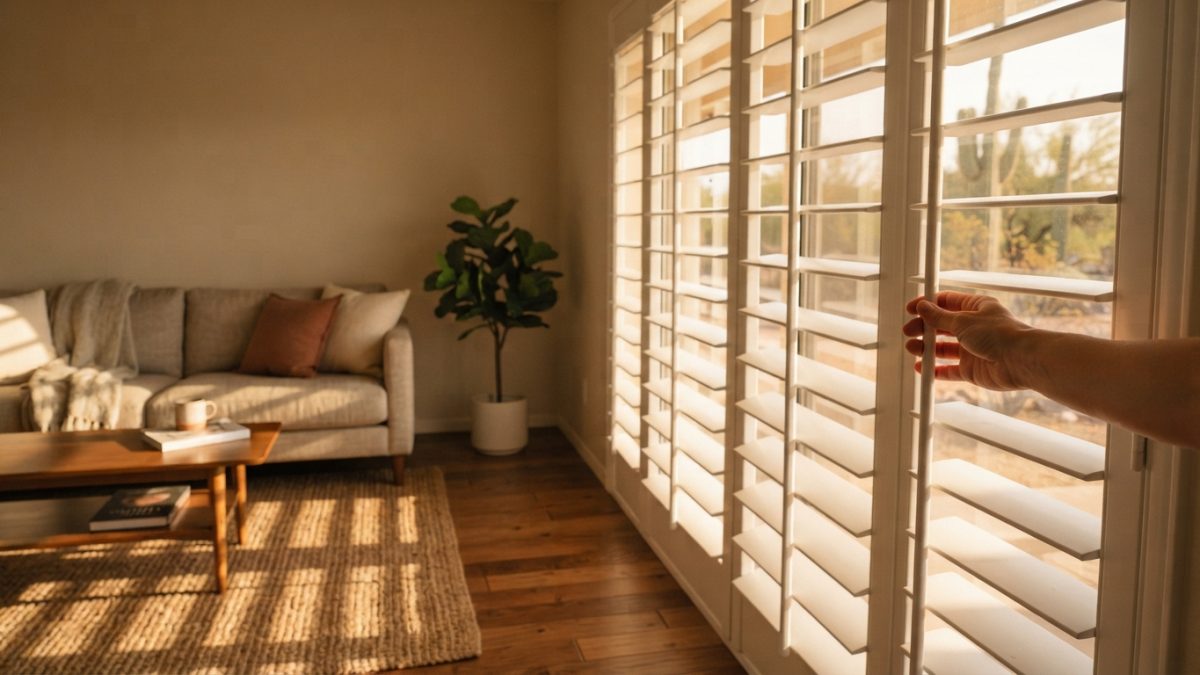
Plantation Blinds in Tempe, AZ have become a common upgrade for Tempe homes because they combine the light control of blinds with the tighter seal of a shutter louver. Unlike loose-hanging curtains, a well-fitted plantation shutter closes flush against the window frame, limiting the air movement that lets hot outdoor air seep into a room.
Why Plantation Blinds Perform Well in Desert Heat
Tempe’s climate puts real stress on window treatments. Intense UV exposure, triple-digit summer temperatures, and wide day-to-night swings all test how well a product holds up and insulates.
According to the U.S. Department of Energy’s guidance on window attachments, about 30% of a home’s heating energy is lost through windows, and in cooling seasons about 76% of sunlight that falls on standard double-pane windows enters to become heat. Interior shutters and tightly closed louvers address this by creating a buffer between the glass and the room, which is why they are frequently grouped with other high-performing window coverings in energy guidance from the DOE.
Key reasons plantation blinds hold up in a hot-dry climate:
- Dense louvers block direct sun while still allowing airflow when tilted open
- A frame-mounted fit reduces drafts around the window edge
- Durable materials resist the fading and warping that comes from year-round sun exposure
Material Options and How They Compare
Material choice affects both appearance and how the shutters handle Arizona’s dry heat. Arizona Shutter Company, a Tempe-based window treatment provider, offers shutters in several substrates suited to local conditions.
| Material | Moisture/Heat Resistance | Typical Use Case |
| Basswood | Good, needs climate-controlled rooms | Living rooms, bedrooms |
| Faux wood / Poplar blend | High, resists warping in heat | Kitchens, sunrooms, west-facing windows |
| Polyhybrid composite | Highest, built for extreme temperature swings | High-sun exposure rooms, patios |
Basswood and poplar-based shutters are commonly chosen for their balance of appearance and durability, while composite or faux wood options are better suited to rooms that take direct afternoon sun.
How to Choose the Right Option for Your Home
Selecting plantation blinds is not only about style. A few practical questions narrow down the right fit for a Tempe home:
- Which windows get the most direct sun? West- and south-facing rooms benefit most from denser, heat-resistant louvers.
- Is moisture a factor? Kitchens and bathrooms do better with faux wood or composite materials rather than solid hardwood.
- How much light control is needed? Wider louvers (generally 3.5 inches or larger) offer more unobstructed view when open, while narrower louvers give tighter light control when closed.
- Will the shutters be custom-fitted? A precise, frame-to-frame fit matters more for energy performance than the material itself, since gaps undercut the insulating air pocket a closed shutter creates.
Installation and Upkeep Considerations
Even the best material underperforms if it is poorly measured or installed. A shutter that does not seat flush against the frame allows air to pass around the edges, reducing the insulating benefit regardless of louver thickness.
Routine care is simple but matters in a dusty, sun-heavy climate:
- Dust louvers weekly with a microfiber cloth to prevent buildup that can affect the tilt mechanism
- Check hinges and tilt rods seasonally, since temperature swings can loosen hardware over time
- Keep shutters closed during peak afternoon sun on west-facing windows to limit heat gain
Frequently Asked Questions
Do plantation shutters actually lower cooling costs in Tempe? They can help reduce solar heat gain when closed during peak sun hours, since a tight-fitting shutter limits how much heat transfers through the glass and frame, consistent with DOE guidance on window attachments.
What is the difference between plantation shutters and plantation blinds? The terms are often used interchangeably by homeowners, but “shutters” typically refers to fixed-frame louvered panels, while “blinds” can include a broader range of adjustable slat products; both can offer similar insulating benefits when properly fitted.
Are faux wood shutters better than real wood for Arizona homes? Faux wood and composite shutters generally resist warping and fading better in high-heat, low-humidity climates, making them a practical choice for sun-exposed rooms.
How long does a typical plantation shutter installation take? Timelines vary by project scope and window count, so homeowners should confirm specifics directly with their installer rather than assume a standard timeframe.
Choosing the right plantation blinds comes down to matching material and fit to how a specific room is used and how much sun it receives throughout the year. Homeowners in Tempe who want a closer look at available styles, materials, and local installation options can review current offerings from Arizona Shutter Company, a window treatment provider based in Tempe, Arizona.