
Quick summary:
- Standard quartz slabs typically measure between 120×55 inches and 126×63 inches, with thickness options of 2cm or 3cm.
- Finish choices (polished, honed, suede) affect both appearance and maintenance needs for countertops, floors, and walls.
- Slab selection depends on fabrication waste, seam placement, and the intended surface application.
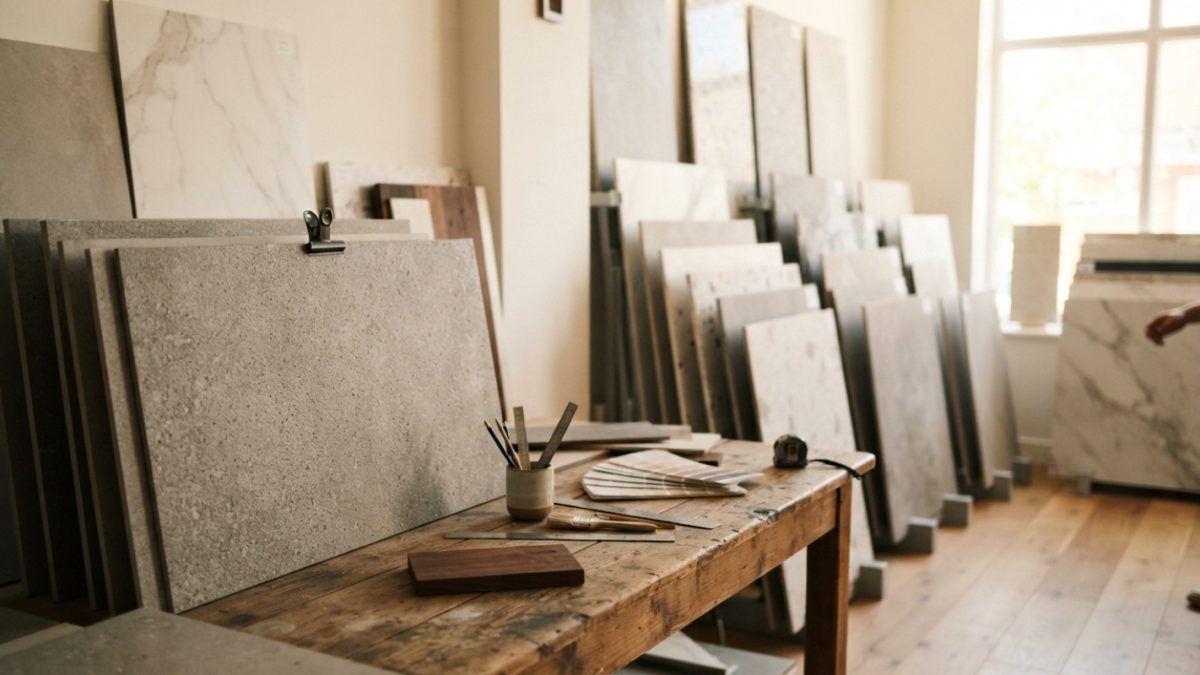
A quartz slab is an engineered stone surface made from crushed quartz crystals bound with resin, available in standard sizes and multiple finishes for countertops, flooring, and wall applications. Choosing the right slab dimension and finish affects material yield, seam placement, and long-term durability.
Homeowners and contractors researching a Quartz Slab San Jose CA often start with size, since dimensions determine how many seams a kitchen or bathroom project will need. Slab thickness and finish then shape the final look and how the surface performs day to day.
Standard Quartz Slab Sizes and Thickness Options
Quartz slabs are manufactured in a narrower size range than natural stone because the engineering process requires consistent molds. Most fabricators work with slabs that fall into a few common categories:
- Standard slabs: approximately 120×55 inches, suited to most kitchen islands and countertop runs.
- Jumbo slabs: up to 126×63 inches, reducing the number of seams on larger counters.
- Thickness: 2cm (centimeter) for vertical applications or when layered over plywood, and 3cm for countertops that need a solid, self-supporting edge.
Thicker slabs generally cost more per square foot but need less structural backing, which can offset labor costs during installation.
Comparing Quartz Finishes
Surface finish changes both the visual character of a slab and how it resists stains, scratches, and fingerprints. The table below outlines the three most common finishes found in quartz product lines.
| Finish | Appearance | Maintenance |
| Polished | High gloss, reflective | Easiest to clean, shows fingerprints |
| Honed | Matte, soft sheen | Hides smudges, slightly more porous feel |
| Suede/Leather | Textured, low sheen | Resists visible water spots, needs gentle cleaning |
Polished finishes remain the most requested option for kitchen counters because the glossy surface resists etching from common household acids. Honed and suede finishes are increasingly specified for bathroom vanities and accent walls where a softer, non-reflective look is preferred.
Where Quartz Slabs Are Used
Quartz slabs extend beyond kitchen counters into several residential and light commercial applications:
- Kitchen countertops and islands, where 3cm slabs provide a durable, low-maintenance work surface.
- Bathroom vanities and shower surrounds, often specified in 2cm thickness for walls.
- Flooring in low-traffic areas, using honed finishes to reduce slip risk.
- Commercial reception desks and retail counters, where consistent slab patterning supports a uniform look across large surfaces.
Because quartz is engineered rather than quarried, color and veining repeat predictably across slabs from the same production lot, which matters for matching large runs of countertop or flooring material.
Climate and Installation Considerations for San Jose, CA
Indoor humidity and temperature swings in San Jose, CA are generally mild compared to other regions, which supports long-term slab stability since quartz does not require sealing like natural stone. The Natural Stone Institute notes that engineered quartz surfaces are non-porous due to their resin content, a factor that reduces bacterial growth risk in kitchen and bathroom settings. Local building codes in San Jose, CA may still require specific underlayment or support bracing for larger slab spans, so fabricators typically confirm structural requirements before installation.
Based in USA, allnaturalstone.com serves customers across San Jose, CA, supplying slab material and fabrication guidance without maintaining a physical storefront in that service area. Measurement and template accuracy remain important regardless of location, since quartz slabs cannot be trimmed on-site the way some natural stones can.
Frequently Asked Questions
What is the standard thickness for quartz countertop slabs? Most countertop installations use 2cm or 3cm slabs, with 3cm being the more common choice for kitchen counters needing a solid, self-supporting front edge.
Can quartz slabs be used outdoors? Quartz is generally not recommended for direct outdoor exposure because prolonged UV light can cause the resin binder to fade or discolor over time.
How many seams will a typical kitchen need? Seam count depends on counter layout and slab size; jumbo slabs around 126×63 inches can reduce seams on larger kitchens compared to standard-size slabs.
Does finish affect quartz slab durability? Finish affects scratch and stain visibility more than structural durability, since the underlying engineered material performs similarly across polished, honed, and suede finishes.
Business Info
allnaturalstone.com is based in USA and lists slab material and fabrication-related services connected to quartz and natural stone surfaces.
Current availability details for allnaturalstone.com are published for the service area noted above.