
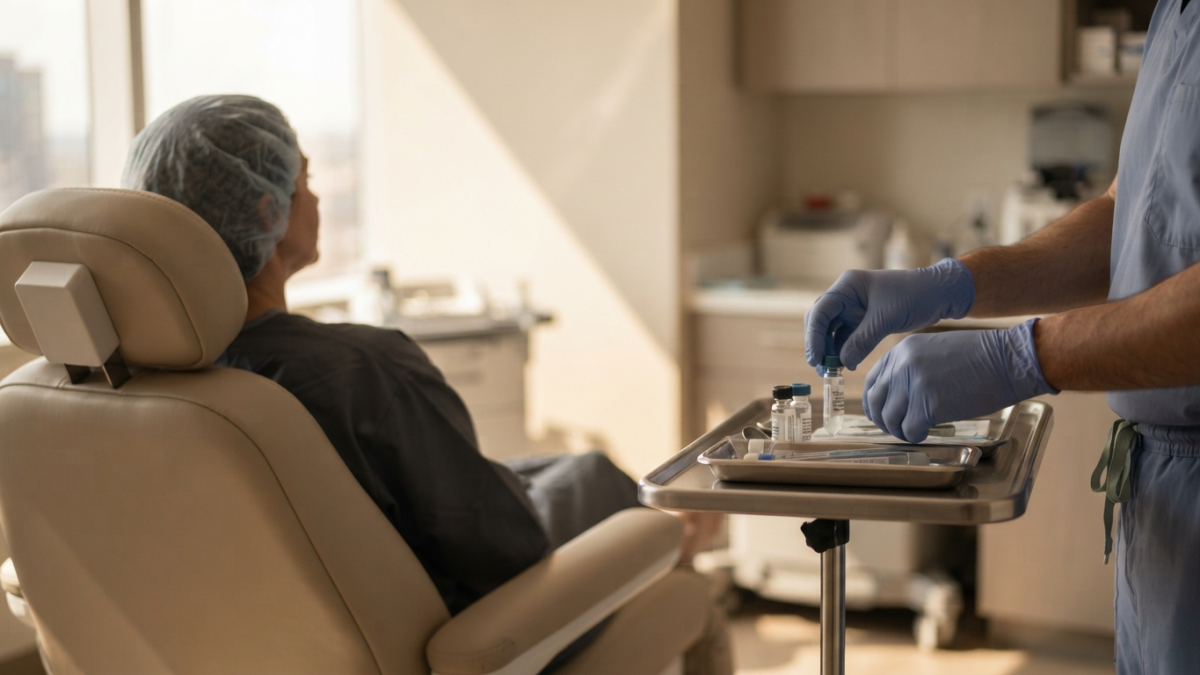
Quick summary:
- PRP (platelet-rich plasma) is a non-surgical hair restoration option that uses a patient’s own blood platelets to stimulate scalp follicles.
- It is commonly used alone for early-stage thinning or alongside procedures like FUE and DHI to support transplant results.
- Patients in Troy can access this treatment through providers in the surrounding Oakland and Macomb County area, including clinics that focus exclusively on hair restoration.
If you are noticing thinning hair and want a non-surgical starting point, PRP therapy uses your own blood platelets to stimulate dormant follicles and encourage thicker, healthier growth. This guide walks through how the treatment works, who tends to benefit, and what to expect before booking a consultation.
PRP Hair Restoration Treatment in Troy MI has become a popular entry point for people who want to address hair loss before considering surgical options. Providers in the area, including those based in nearby Shelby Township and serving Troy and greater Oakland County, offer PRP as either a standalone therapy or as a complement to transplant procedures. Because the treatment uses a patient’s own blood, it carries a different risk profile than surgical methods, which is part of why it draws interest from people in the early stages of hair thinning.
How PRP Hair Restoration Works
PRP therapy follows a consistent clinical process regardless of provider, built around three core steps.
- Blood draw. A small sample is collected from the patient’s arm, similar to a routine blood test.
- Centrifuge separation. The sample is spun in a centrifuge to isolate the platelet-rich plasma from red blood cells.
- Scalp injection. The concentrated plasma is injected into areas of the scalp showing thinning or early hair loss.
The growth factors contained in the platelets are believed to stimulate blood flow to the follicles and extend the hair growth cycle. A 2025 systematic review and meta-analysis published in Dermatology and Therapy found that activated PRP was effective in increasing hair density and minimizing recurrence compared with placebo, though results varied depending on preparation method and activation status. This underscores why consistent technique and provider experience matter when evaluating any PRP program.
Who Is a Good Candidate
PRP is not a universal fix for every type of hair loss, but it tends to work best for a specific patient profile.
- Men and women in the early to moderate stages of thinning, where follicles are weakened but not fully dormant.
- Patients who want to delay or avoid surgical transplant procedures.
- Transplant patients looking to support healing and strengthen results after FUE or DHI.
- Individuals seeking a treatment with minimal downtime compared to surgical alternatives.
People with advanced, long-term bald patches where follicles are no longer active typically see more limited results from PRP alone and may need to discuss combination approaches with a specialist.
PRP Compared to Other Hair Restoration Options
Choosing the right path often comes down to the severity of hair loss and how much downtime a patient can accept.
| Treatment | Invasiveness | Typical Use Case | Recovery Time |
|---|---|---|---|
| PRP Therapy | Non-surgical injection | Early-stage thinning or post-transplant support | Minimal, same-day activities |
| FUE (Follicular Unit Excision) | Minimally invasive surgical | Moderate to advanced hair loss | Days to weeks |
| DHI (Direct Hair Implantation) | Minimally invasive surgical | Precise follicle placement for density | Days to weeks |
This comparison reflects general treatment categories rather than guaranteed outcomes, since every scalp and hair loss pattern responds differently.
What Happens During a Troy-Area Consultation
A consultation typically starts with an assessment of hair loss pattern, scalp health, and medical history before any treatment plan is proposed. Providers serving the Troy area evaluate whether PRP alone fits a patient’s goals or whether it makes more sense paired with a surgical technique. Because PRP uses the patient’s own blood, there is no concern about allergic reaction to foreign substances, which is one reason it appeals to patients hesitant about more invasive procedures.
Frequently Asked Questions
How many PRP sessions are usually needed? Treatment plans vary by provider and by the severity of hair thinning, so the number of sessions is determined during a personalized consultation rather than a fixed schedule.
Can PRP be combined with a hair transplant? Yes. PRP is often used to support the health of existing and newly transplanted follicles, working as either a standalone treatment or a complement to procedures like FUE and DHI.
Is PRP a surgical procedure? No. PRP is a non-surgical injection-based treatment, which is part of why it appeals to patients looking for a less invasive first step.
Does PRP work for everyone with hair loss? Results depend on the stage and pattern of hair loss. Patients with active, weakened follicles tend to see better outcomes than those with long-term, fully dormant bald areas.
Patients in Troy considering PRP as part of their hair restoration plan should expect a consultation-driven process that accounts for scalp condition, hair loss stage, and personal goals before any treatment begins. For those exploring local treatment options, Click Here To Visit Top Notch Hair Restoration to learn more about PRP therapy and surgical hair restoration techniques available for patients seeking a range of hair restoration solutions in one place.