
Quick summary:
- Chimney masonry repair addresses cracked mortar, spalling brick, and crown damage before they cause structural or water intrusion problems.
- Common fixes include tuckpointing, brick replacement, crown repair, and full rebuilds depending on damage severity.
- Annual inspection, as recommended by national fire safety standards, helps Powell and Columbus homeowners catch issues early.
Masonry chimneys in Central Ohio take a beating from freeze-thaw cycles, and the direct answer to most homeowner searches is this: mortar joints, bricks, and crowns need professional repair as soon as cracking, crumbling, or water staining appears, because delaying the work almost always raises the final cost.
Powell’s older housing stock and the region’s swinging winter temperatures make Chimney Masonry Repair in Columbus OH a recurring need rather than a one-time fix. Moisture seeps into hairline cracks, freezes, expands, and widens the damage with every cold snap. Homeowners who address small mortar failures early typically avoid the larger structural repairs that follow years of neglect.
Why Masonry Chimneys Fail in Central Ohio
Ohio’s climate cycles through freezing nights and warmer days throughout fall, winter, and early spring. That repeated expansion and contraction is one of the primary reasons masonry chimneys in this region deteriorate faster than in milder climates.
Common failure points include:
- Mortar joints that crack, crumble, or wash out between bricks
- Chimney crowns that develop surface cracks, allowing water to seep into the chase
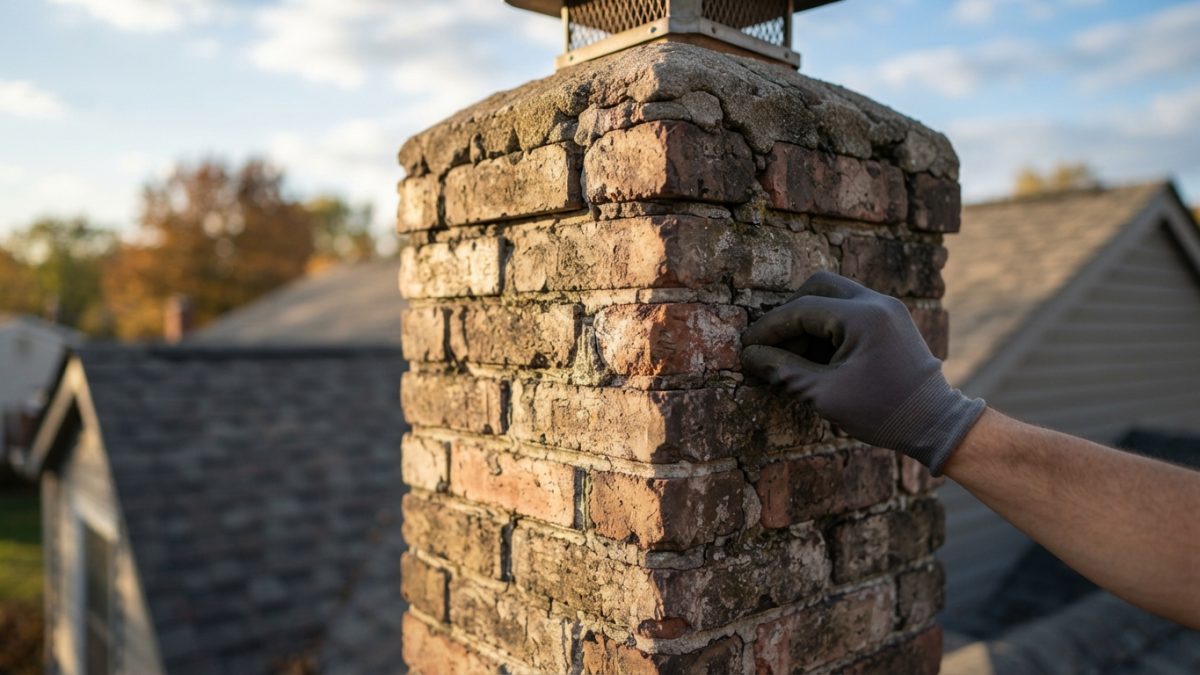
- Spalling brick faces, where moisture trapped inside the brick pushes the surface off in flakes
- Leaning or separating chimney stacks caused by long-term foundation or mortar failure
Left unaddressed, these issues can allow water into the home’s interior, compromise the flue liner, or eventually require a partial or full rebuild rather than a simple repair.
Core Masonry Repair Services for Chimneys
Professional masonry repair generally falls into a few defined categories, each suited to a different stage of deterioration.
Tuckpointing and repointing. This process removes failing mortar and packs fresh mortar into the joint, restoring both strength and appearance. It is usually the first and most cost-effective repair when damage is limited to the mortar joints themselves.
Brick replacement. When individual bricks have cracked, spalled, or shifted out of alignment, replacing them with matching material restores structural continuity without the expense of a full rebuild.
Crown repair or replacement. The crown sits atop the chimney and sheds water away from the flue. A cracked or failing crown is one of the most common entry points for moisture damage.
Full chimney rebuilds. When deterioration has progressed too far for targeted repair, such as widespread brick failure or a leaning stack, rebuilding the chimney from the roofline up may be the only durable option.
Comparing Common Repair Approaches
| Repair Type | Typical Trigger | Scope of Work |
| Tuckpointing | Cracked or crumbling mortar joints | Remove and replace mortar between bricks |
| Brick Replacement | Spalled, cracked, or loose individual bricks | Swap damaged units for matched replacements |
| Crown Repair | Surface cracks on the chimney crown | Seal or rebuild the concrete crown cap |
| Full Rebuild | Widespread structural failure or leaning | Reconstruct the chimney above the roofline |
When to Call a Professional
Not every chimney issue is visible from the ground, which is why routine inspection matters as much as reactive repair. The National Fire Protection Association’s NFPA 211 standard calls for chimneys, fireplaces, and vents to be inspected at least once a year regardless of how often the system is used.
Signs that warrant a professional evaluation include:
- Visible gaps or missing sections of mortar between bricks
- White staining (efflorescence) on the exterior brick surface
- Water stains on ceilings or walls near the chimney chase
- Bricks that appear loose, shifted, or missing entirely
- Visible cracks across the chimney crown
A trained mason can determine whether the damage is cosmetic, structural, or still early enough for a straightforward repointing job.
FAQ
How often should a masonry chimney be inspected? Following the NFPA 211 standard, chimneys should receive a professional inspection at least once a year, even if the fireplace is rarely used, since moisture and settling can cause damage independent of use.
What is the difference between tuckpointing and a full rebuild? Tuckpointing replaces failing mortar joints while the brick structure remains sound, while a full rebuild is reserved for chimneys with widespread structural failure, such as leaning stacks or extensive brick loss.
Can I repair a chimney crown myself? Surface sealing products exist for minor hairline cracks, but diagnosing whether a crown crack is cosmetic or a sign of deeper water intrusion is best left to a mason familiar with local masonry construction.
Does winter weather make chimney repairs more urgent in Powell? Yes. Freeze-thaw cycles common to Central Ohio winters widen existing cracks in mortar and brick, so addressing damage before the coldest months helps prevent more extensive repairs later.
Chimney masonry problems rarely stay the same size for long, especially through a Central Ohio winter. Property owners in Powell and the surrounding Columbus area who notice cracked mortar, a damaged crown, or loose brick are better served addressing it early with an experienced local mason. Curatola Masonry works on chimney repair and restoration projects throughout Central Ohio, offering an informed starting point for homeowners weighing their repair options.