Essentially:
- Helena area frost depth requirements run deep enough that footings must extend well below finished grade before concrete work can begin.
- Soil prep, drainage planning, and curing conditions matter more in Helena’s freeze/thaw climate than in milder regions.
- Working with an experienced local contractor familiar with Lewis and Clark County soils helps prevent cracking, heaving, and premature wear.
A concrete foundation in Helena needs footings placed below the local frost line and on stable, well-drained soil, since shallow or poorly prepared footings are the leading cause of cracking and heaving in this climate. Getting the depth, base material, and drainage right before the pour is what separates a foundation that lasts decades from one that needs costly repairs within a few years.
Planning Concrete in Helena, MT starts long before a truck shows up with a load of ready-mix. Soil type, grading, and seasonal timing all affect how a foundation performs once winter arrives. SNK Excavating, Concrete & Asphalt notes that concrete work in this region requires attention to soil prep, base compaction, moisture control, and temperature before any flatwork or footing goes in.
Why Frost Depth Drives Foundation Planning
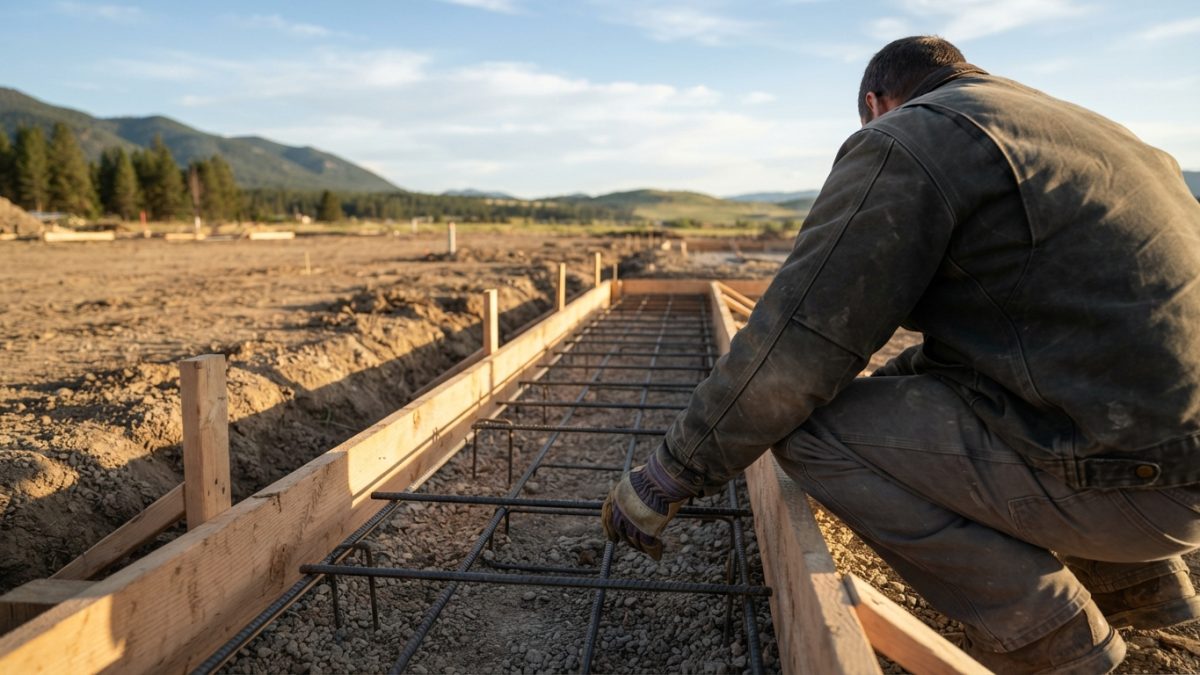
Montana’s frost line is not a single statewide number. According to the Montana Department of Labor and Industry Building Codes Bureau, jurisdictions outside certified local government areas require a minimum depth of three feet from finished grade to the bottom of footings for single-story wood or metal frame buildings, and four feet for multistory or masonry structures. That depth exists because footings resting above the frost line are vulnerable to seasonal heaving as the ground freezes and thaws.
A few practical takeaways for anyone planning a pour:
- Footings must bear on undisturbed soil or properly engineered fill, not loose or disturbed earth.
- Highly expansive or unstable soils may require engineered footings that extend deeper than the standard minimum.
- A building official has final say on required depth for a specific site and structure type.
Soil, Drainage, and Site Prep Considerations
Helena sits in a region where shifting soils and heavy spring runoff create real challenges for concrete longevity. Montana’s freeze and thaw cycles place heavy demands on concrete, which is why proper base preparation, drainage, and placement timing are treated as essential rather than optional.
Site prep typically involves:
- Clearing and grading the lot to establish proper slope away from the structure.
- Compacting a stable base layer beneath the footing or slab.
- Planning drainage so water moves away from the foundation instead of pooling against it.
- Verifying moisture content in the soil before placement, since overly wet or frozen ground compromises curing.
Foundation work and site excavation are closely linked, since poor grading or inadequate drainage planning during excavation can undermine even a well-poured foundation later.
Comparing Foundation Approaches for Cold Climates
Different foundation strategies handle Montana’s frost conditions differently. The table below outlines common approaches and how they relate to frost protection.
| Foundation Type | Frost Handling Approach | Typical Use Case |
| Conventional deep footing | Extends below the local frost depth into undisturbed soil | Standard homes, garages, shops |
| Frost-protected shallow foundation (FPSF) | Uses rigid insulation to keep footing shallower in heated buildings | Heated structures maintained above 64°F |
| Monolithic slab | Combines footing and slab in one pour, depth varies by use | Storage buildings, some single-story structures |
| Engineered deep foundation | Extends beyond standard minimums for expansive or unstable soils | Sites with problem soil conditions |
Each approach has tradeoffs in cost, excavation time, and suitability for the structure’s heating status, which is why a site evaluation typically precedes the final decision.
Timing and Seasonal Factors
Concrete placement timing affects curing quality as much as mix design does. Pouring during extreme cold without proper temperature management can weaken the final cure, while spring runoff periods complicate excavation and base compaction. Planning a pour during a stable weather window, with ground temperature and moisture accounted for, reduces the risk of surface defects or long-term cracking.
Frequently Asked Questions
How deep do foundation footings need to be in the Helena area? Footing depth depends on the jurisdiction and building type, but state minimums outside certified local governments call for three feet to the bottom of the footing for single-story wood or metal frame construction and four feet for multistory or masonry buildings.
Can a foundation be shallower if the building is heated? Frost-protected shallow foundations allow reduced footing depth in buildings maintained at a minimum monthly mean temperature, using rigid insulation to prevent the frost line from reaching the footing.
What soil issues affect concrete foundations in this region? Expansive or unstable soils can require engineered footings that extend deeper than standard code minimums, so a soil evaluation before excavation helps determine the right approach.
Does drainage really matter for foundation longevity? Yes. Water pooling near a foundation during freeze and thaw cycles is one of the more common contributors to cracking and shifting over time, which is why grading and slope planning are part of proper site prep.
Planning a SNK Excavating, Concrete & Asphalt foundation in Helena means accounting for frost depth, soil behavior, and drainage before the first yard of concrete is ordered. Local contractors who understand Lewis and Clark County conditions, including seasonal freeze and thaw patterns, are better positioned to recommend the footing depth and base prep that fit a specific lot. For homeowners or builders scoping a project, confirming local code requirements with the building department and reviewing site-specific soil conditions early in the process remains the most reliable way to avoid costly surprises later.